
Digital Data-Driven Decision-Making and Communication Tools (DiDEK Baustelle)
Construction sites are an essential part of maintaining and improving urban infrastructure, yet their long-term benefits often remain difficult to recognise during periods of disruption. At the same time, cities require new forms of communication and participation to explain complex transformation processes in a transparent and accessible way. The project "Digitale Datenbasierte Entscheidungs- und Kommunikationstools" (DiDEK Baustelle) addresses this challenge by developing digital tools that improve communication, coordination and public understanding of urban construction measures.
The project is particularly relevant in Hamburg, where extensive infrastructure investments are being implemented under the “Zukunft Tiefbau” strategy. As the city enters an intensive phase of renewal and expansion, DiDEK Baustelle aims to make construction processes more understandable, data-driven and citizen-oriented. The project is a strategic research initiative with the Authority for Transport and Mobility Transition (BVM). It runs from June 2025 to June 2027 in collaboration with Agency for Geoinformation and Surveying (LGV), LSBG/DigiLab and selected construction site initiators.
The project develops and tests practical solutions for integrated construction communication and data management. Information from different authorities and external sources is brought together through a central data hub based on Hamburg Urban Data Platform (UDP). On this basis, administrative tools for cross-departmental coordination and public-facing applications such as interactive maps, AI-supported chatbots and digital storytelling tools are being created.
The research focuses on the visualisation of mobility impacts, accessibility analysis for vulnerable groups and barrier-free routing during construction phases. Through practice-oriented technology research, stakeholder workshops and real-world testing, the project generates insights for more effective and citizen-centred infrastructure communication. The results will be shared publicly through publications, exchange formats and modular open-source solutions.
Please contact Alexandra Knapke or Konstantin Seitz for more information about the project.
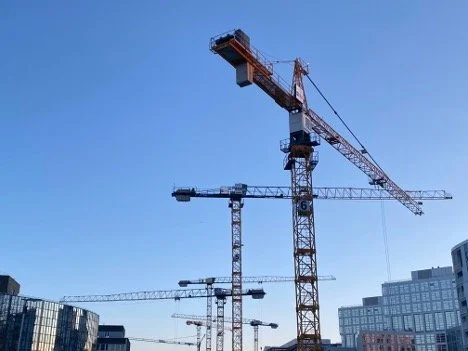
Photo by Konstantin Seitz